ELA
Writing
 A big focus on our KidBlog writing was working on creating strong supporting details, with varied sentence starters. On Talk About it Tuesday students discussed their favourite board games. Choosing one, they had to explain why it was the best board game ever!
We also started to expand on our reasons, by giving examples or explaining why it is a good reason. This was the students firts introduction to O.R.E.O. Style opinion writing! We always triple stuff our oreo's with at least 3 strong reasons.


 In our Grammar work, we looked at incomplete and complete sentences. Students learned that sentences have to have a subject and predicate in order to be a complete sentence. The subject is WHO or WHAT the sentence is about. This usually is the main noun in the sentence. The predicate is what the subject is doing.
Reading
We have been working on our inferring and predicting skills. Although these skills are similar, they are definitely different! Inferring is when we read between the lines to find out about character feelings, setting, or what is happening right now.
To introduce this, we watched a video fro the series Simon's cat. These are videos without words, where we have to use our background knowledge and personal experiences to infer the characters feelings.

 As a guided practice, we read through another book by our much loved author Jon Klassen's I Want My Hat Back. Pausing throughout the book, I modeled with the students how we make predictions. It is important to be able to back up our predictions with evidence or clues from the text. Once you have finished reading the book you need to check - was your prediction correct? We have read other titles from this author - This is Not My Hat with previous strategies, which helped when we made our predictions.

Math
Students have been working with numbers before starting our addition and subtraction unit. First we looked at numbers and how we can sort them based on their attributes:


 A big focus on our KidBlog writing was working on creating strong supporting details, with varied sentence starters. On Talk About it Tuesday students discussed their favourite board games. Choosing one, they had to explain why it was the best board game ever!
We also started to expand on our reasons, by giving examples or explaining why it is a good reason. This was the students firts introduction to O.R.E.O. Style opinion writing! We always triple stuff our oreo's with at least 3 strong reasons.
Students then took their planning and put it into well polished paragraphs! They did such an awesome job! When they went from plans to paragraph they worked hard to check their own work for punctuation, capitals and complete sentences!
Here are some samples of work!


They did so great I had to put them up on our Daily Prophet wall!

Reading
We have been working on our inferring and predicting skills. Although these skills are similar, they are definitely different! Inferring is when we read between the lines to find out about character feelings, setting, or what is happening right now.
To introduce this, we watched a video fro the series Simon's cat. These are videos without words, where we have to use our background knowledge and personal experiences to infer the characters feelings.
- How do you think the cat feels?
- Where do you think they might be going? Why?
We used our inferring skills on a second video - again with no words - to look for clues that would tell us about the setting. Students responded as a group to the video using Padlet. An electronic post it wall!

We also worked with inferring during reading, as a group and individually. Students read passages describing a character and were to infer the setting or emotions of characters involved.
For Predicting, it is a little different - predicting you are making an educated guess as to what will HAPPEN NEXT.
Once again, we started this strategy with a video - For the Birds by Pixar.
I paused the movie at certain points to ask students to predict - what will happen next?
Using our background knowledge + experiences students made educated guesses as to what would happen next in the video. When we make predictions, as we carry on in the student they usually can be confirmed. This makes them a bit different from
As a guided practice, we read through another book by our much loved author Jon Klassen's I Want My Hat Back. Pausing throughout the book, I modeled with the students how we make predictions. It is important to be able to back up our predictions with evidence or clues from the text. Once you have finished reading the book you need to check - was your prediction correct? We have read other titles from this author - This is Not My Hat with previous strategies, which helped when we made our predictions.
As independent practice, students read through the book Dr. De Soto's on Epic! and recorded predictions they had while reading, clues that lead them to make the predictions, and then confirmed whether or not their predictions were correct or not.

Students have been working with numbers before starting our addition and subtraction unit. First we looked at numbers and how we can sort them based on their attributes:
- Greater than a number
- Less than a number
- Amount of digits
- Odd or Even
As a group we worked on sorting various numbers into different circle diagrams.


Next we worked on rounding numbers to nearest tens, hundreds, and thousands. Students were very good at rounding numbers to the nearest tens, hundreds and thousand - if it was the same amount of digits. However, there seemed to be a common struggle to round a 4 digit number to nearest hundred or ten. You may notice, we have a daily rounding problem in our agendas now for students to get a better grasp on this skill.
Rounding has led us into estimating sums! As a class, using double and triple die, we rolled numbers, rounded them to nearest ten or hundred and then estimated answers. We discussed terms like over estimate, and under estimate.
Next week we will start addition with regrouping!
Science
Bennett Center
This was an awesome day! The Bennett Center came to teach use all about wheels and levers! Students learned about wheels, pulleys, levers, gears and got to put them into action!

Bennett Center
This was an awesome day! The Bennett Center came to teach use all about wheels and levers! Students learned about wheels, pulleys, levers, gears and got to put them into action!

We have sorted all our trash! We collected all of our waste in the class over a week, and sorted it into categories created by the students: plastic waste, organic waste, school waste, liquid waste, foil waste and paper waste.
We weighed each category to see what we had the most waste in! By weight the hands down winner was organic waste! We toss so much food! Out of all the organic waste (6.8 lbs) only 1.8 lbs was completely used, finished non-compostable food! This really made us look at how much we throw out!


The category we had the most in volume in was... plastic waste! We realized so much of our lunch is wrapped in plastic, ziploc bags, etc. You may have noticed - we started a lunch waste challenge! We looked at the different between Mrs. D's lunch and QB's lunch. And how things that have disposable packages can packed differently. Everyone did AMAZING! I was so proud.. I baked them a loaf of banana bread and we all had a snack on Friday!


We also looked into the various packaging of products and their waste. Our experiment revolved around ketchup chips! We looked at 1 product that is packaged multiple ways. Each package has different post consumer waste and we analyzed if the packaging was necessary and how it affects the consumer.


We also looked into the various packaging of products and their waste. Our experiment revolved around ketchup chips! We looked at 1 product that is packaged multiple ways. Each package has different post consumer waste and we analyzed if the packaging was necessary and how it affects the consumer.


Then of course we got to eat the product, which is always the best part!!!
Social
In Social, we looked deeper into the Canadian Shield as a region. Students read from reading passages, textbooks and websites to learn about the different landforms, climate, animals, natural resources, jobs and daily life in the Canadian Shield region.
We also spent some time on Quizlet! I love this site! It is an interactive site where students work with vocabulary. After looking through flashcards and recording vocab we will be using all year into their duptangs, they were able to play some games! If you would like to see the site, students can access it through google classroom.


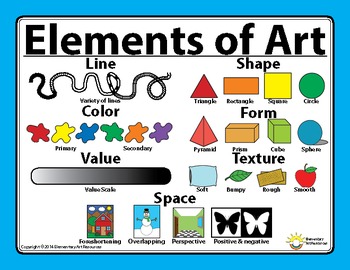
In Art we created some star art! Using our line reference pages, students filled stars with lines, as well as, creating borders.